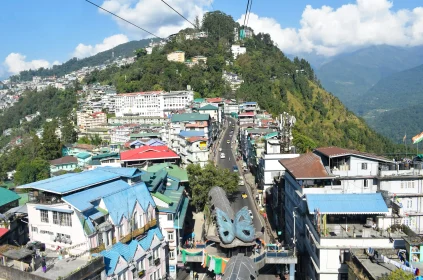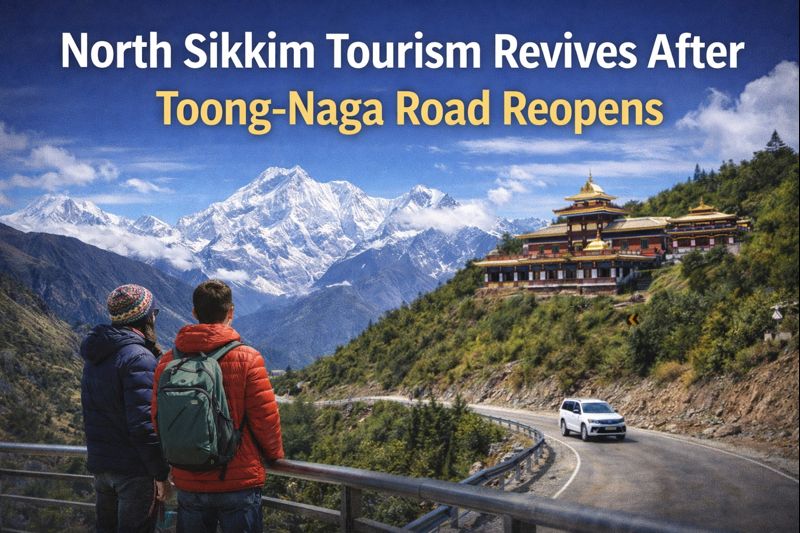
Tourism in North Sikkim is showing signs of revival following the reopening of the Toong-Naga Road, officials confirmed. The restored road has restored normal tourist movement, particularly towards Lachung, a key destination in the region.
Smooth Tourist Flow and Improved Infrastructure
According to Nim Tshering Lepcha, Chairman of the Sikkim Welfare Commission, nearly 400 tourist vehicles are now visiting Lachung daily. Road conditions have significantly improved, ensuring safe and uninterrupted travel for visitors exploring the scenic landscapes of North Sikkim.
The Border Roads Organisation (BRO) is also constructing a bridge over the Taram Chu River on the route to Lachen. The bridge is expected to be completed by the first week of February, after which tourist traffic to Lachen will resume.
Rehabilitation Efforts for Affected Families
The Toong-Naga region was heavily affected by the October 2023 Glacial Lake Outburst Flood (GLOF), which caused widespread damage to roads, bridges, and settlements along the Teesta basin. Continuous landslides further disrupted connectivity and displaced several families.
To support affected communities, Lepcha stated that 125 families from Rel, Naga, and Toong wards will be relocated to Upper Bojoghari in Gangtok. Land parchas for permanent housing are scheduled to be distributed on February 8, 2026, with construction of new homes set to begin immediately thereafter.
Government and Army Support
The Government of Sikkim has prioritized rehabilitation and resettlement of families impacted by the GLOF, ensuring their safety, sustainability, and dignity.
The Indian Army, under the Trishakti Corps, played a crucial role in the aftermath of the disaster. Army personnel assisted with evacuation, medical aid, debris clearance, and temporary road connectivity, helping restore access to remote areas despite challenging terrain and weather conditions.
Road to Normalcy
The reopening of the Toong-Naga Road represents a significant step towards normalcy, tourism revival, and community rehabilitation in North Sikkim. With improved infrastructure and ongoing support for affected families, the region is now better prepared to welcome tourists safely and ensure sustainable development in this scenic Himalayan area.